

No one is lying in bed at night thinking, “I need microneedling.”
They are thinking, “I want my skin to look smoother.”
Or, “I want to stop wearing so much foundation.”
Or, “I want to feel confident again.”
That is the difference between selling a treatment and understanding what people actually want.

What Is The Jobs To Be Done Theory?
The Jobs To Be Done Theory is a marketing concept popularized by Clayton Christensen in the 90s.
The idea is simple:
People do not buy products or services.
They “hire” them to do a job in their life.
In beauty, that means:
- Clients do not want microneedling
- They want smoother skin
- They want fewer breakouts
- They want confidence
The treatment is just the tool. The outcome is the job.

Why This Matters In Real Life
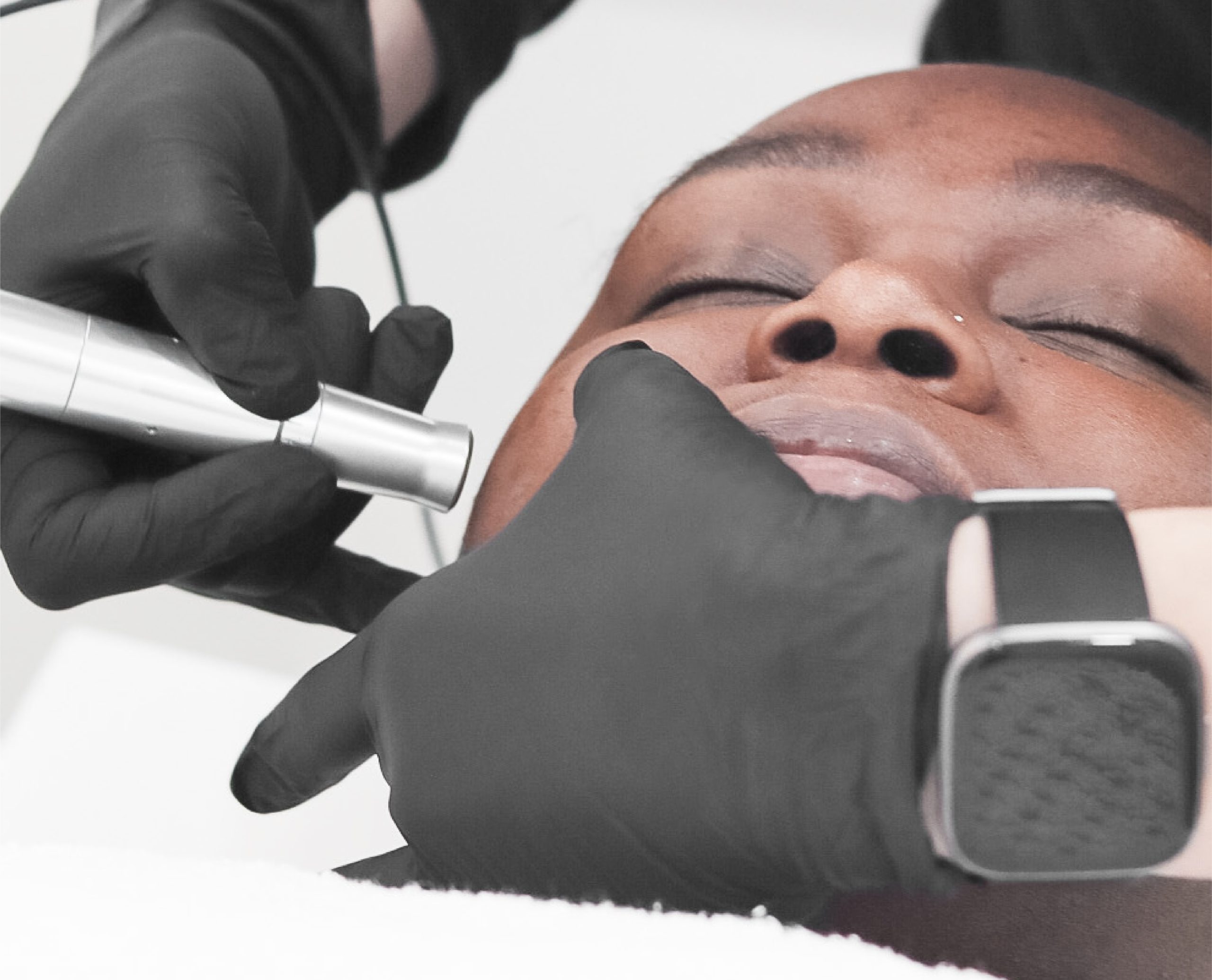
Let’s take one service: Microneedling.
Most people market it like: “Microneedling facial available now.”
But your client is not searching for that.
They are searching for a result.
Here is how the same service looks when you apply this thinking:
- Fade acne scars without makeup
- Rewind your fine lines
- Ditch the foundation
Same treatment. Three completely different messages.
Each one speaks to a different person.

Jobs To Be Done Theory In Action: One Service, Multiple Campaigns
This is where things start to get strategic.
Instead of posting randomly about microneedling, you build campaigns based on what different people want from it.
You are not talking to everyone anymore.
You are talking to specific groups.
This is called segmentation in marketing.
Segmentation means breaking a large group of people into smaller groups based on:
- Their goals
- Their concerns
- Their behaviours
For example:
- Someone with acne scars
- Someone noticing fine lines
- Someone tired of wearing makeup
These are not the same person. So why would you talk to them the same way?
Each of these becomes its own campaign.
Why Focusing On One Message Works Better
It might feel repetitive to talk about one outcome of one thing for a full month.
But repetition is exactly what works.
Today we scroll fast. We forget faster.
Your audience is seeing hundreds of posts a day. If you only mention something once, it disappears.
When you repeat a message:
- It becomes familiar
- It feels more trustworthy
- It sticks
For example, you could run a campaign:
“Fade Acne Scars Without Makeup”
Over 30 days, you create about eight posts around this idea, e.g.:
- Before and after results
- What causes acne scars
- How the treatment works
- What it feels like
- Who it is for
You are still posting other content, but this becomes your focus.
You are now speaking directly to one segment of people.
And because you are repeating it, they start to feel like you are speaking directly to them.
That is when bookings happen.
Why You Should Keep The Same Campaign Name
If you are running a campaign like “Fade Acne Scars Without Makeup”, do not keep changing the wording.
Even if you are talking about different angles such as:
- Before and after results
- What the treatment feels like
- How it works
- Who it is for
You want to keep the exact same campaign name every time.
Here is why.
Repetition only works if it is recognizable.
Your audience is not reading every post carefully. They are scrolling. Fast. Most of the time, they are only catching a few words.
When they keep seeing the same phrase over and over again, something happens:
- It becomes familiar
- It becomes easy to recognize
- It starts to feel like a “known option”
This is how you move from being just another post in their feed to becoming a clear solution in their mind.
If you keep changing the wording slightly each time, you break that pattern.
Instead of:
- Fade acne scars without makeup
- Reduce acne marks naturally
- Improve post-acne texture
You want:
- Fade acne scars without makeup
- Fade acne scars without makeup
- Fade acne scars without makeup
Different content. Same anchor.
Over time, that phrase becomes associated with you and with that result.
So when someone is finally ready to book, they are not thinking about microneedling.
They are thinking:
“I want to fade my acne scars without makeup.”
Because you have teed them up with content about how microneedling does this, they’ll know what to book.
And you are already the person they associate with that outcome.

This Applies To Every Service You Offer
This is not just for microneedling.
You can apply this to anything. For example:
Nails And Lashes
You could run a:
- “Get ready for prom” campaign
- “Low-maintenance beauty for busy mornings” campaign
Same service. Different jobs.
Other Examples:
Teeth Whitening
Think about different groups:
- Coffee drinkers
- Smokers
Campaign idea:
“Erase years of coffee stains from your smile”
Now you are speaking directly to a specific group.
Chemical Peels
- Brighten dull skin before an event
- Peel away acne scars
- Soften your fine lines
Dermaplaning
- Get that smooth, filtered-skin look
- Make your makeup sit perfectly

How To Apply This Today
Here is a simple exercise.
Take your top three services.
For each one:
- List everything it helps with
- Think about the different types of people who would want those results
- Break them into smaller groups
Then ask yourself:
- What does this group actually want?
- How would I say that in a way that feels real to them?
From there, you can build campaigns.
You probably already have content that fits these ideas.
If you look back, you will likely find that for one service, you already have multiple angles you can use.
You are not starting from scratch.
You are organizing what you already have.

What Happens Next
Once you choose a campaign:
- Run it for a set period
- Repeat the message
- Track your bookings
See if that specific type of service increases.
Then switch to another campaign for a different group.
This is how you build consistency without constantly guessing what to post.
Why Team Alignment On Campaign Naming Matters
If you are working with a team, whether it is estheticians, or front desk staff, everyone needs to be aligned on what the campaign is called. This matters a lot.
If your newsletter uses one name, but your estheticians, front desk, or booking system use another, you create confusion and risk losing the booking.
Clients need things to feel quick, clear, and immediately recognizable. The moment they have to pause and make a mental connection, you lose them.

The Jobs To Be Done Theory is not complicated.
But it changes how you think.
You stop asking:
“What do I offer?”
And start asking:
“What does my client want?”
Because at the end of the day, no one is buying a treatment.
They are buying a result. And that’s exactly what you offer!